

The Gen Z Stare Isn't a Generational Problem. It's a Branding One.
2-minute read.
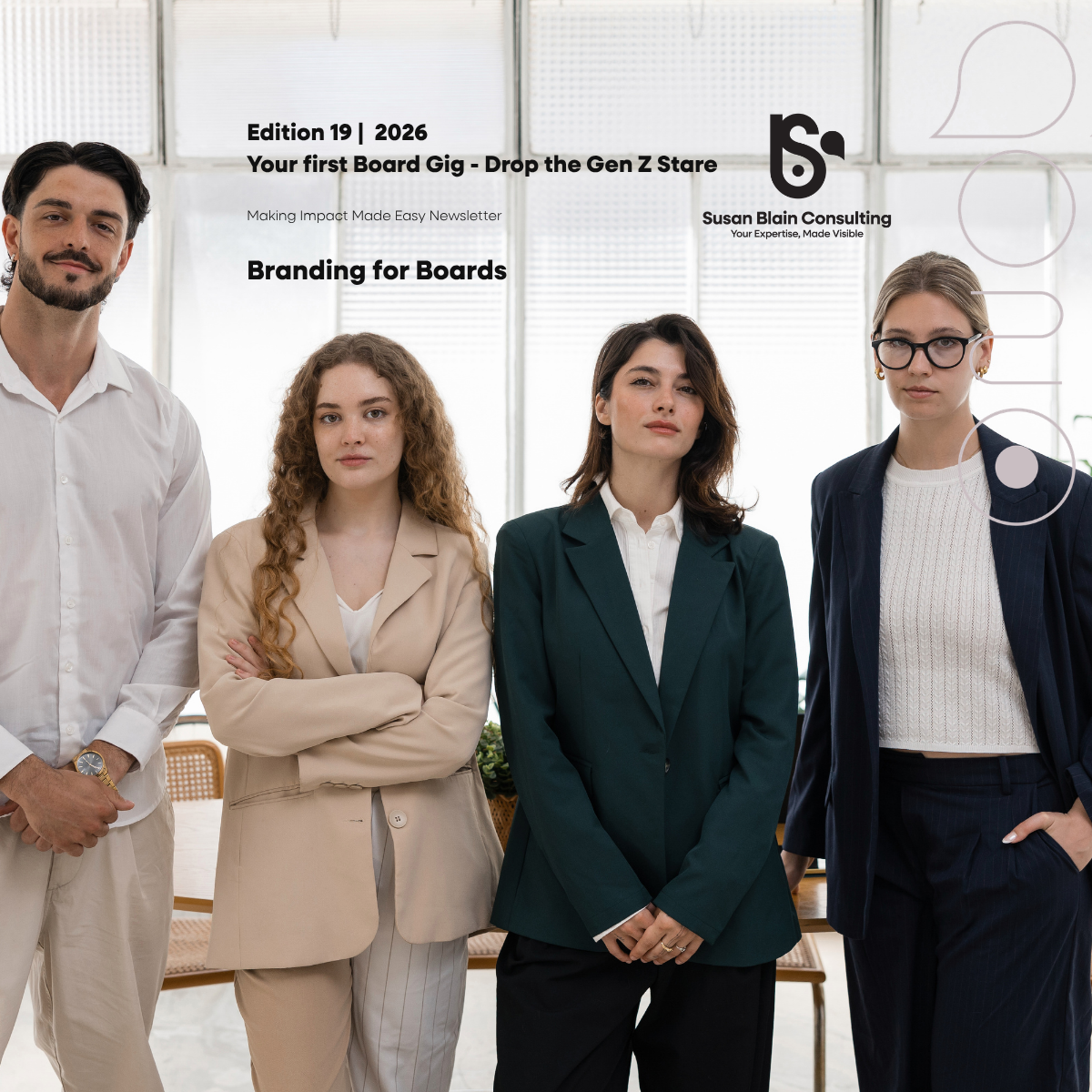
There's a trend doing the rounds that every senior leader I speak with has an opinion on: the "Gen Z stare." The flat, unreadable expression young workers are said to deliver in place of a verbal response. Add the "Gen Z pout" and you've got two viral shorthand terms for the same underlying concern: that a generation raised on curated digital self-presentation is struggling to read as engaged in a room.
I don't think this is really about attitude. I think it's about a skill gap that nobody has been explicit about teaching, and it's costing talented young professionals credibility they haven't earned the chance to lose.
Presence is a language, and it has to be learned deliberately
Here's the thing that gets missed in the generational sniping: today's early-career professionals are often extremely skilled at self-presentation. They just built that skill for a different audience, on a different stage. A confident LinkedIn post and a confident stakeholder meeting draw on related but distinct muscles, and the second one has had far less deliberate practice.
Executive presence has never been about pedigree. It has always been about whether the person in front of you signals confidence and credibility in the moment, through tone, posture, eye contact and response. That's learnable. It just has to be practiced somewhere other than a camera roll.
An illustrative scenario: the underestimated staffer
Here’s a hypothetical scenario to illustrate my point: Picture a junior policy or communications staffer who is genuinely switched on and across every brief. In stakeholder meetings, though, their expression barely shifts. Senior colleagues quietly start to read that flatness as disengagement, even boredom, and begin routing the more sensitive relationships around them rather than through them.
Nobody says anything, because it feels unfair to critique someone's face. The staffer has no idea a perception problem even exists. Once a mentor names it directly, small changes, a deliberate pause before responding, one genuine question per meeting, holding eye contact a beat longer, change how the room reads them within weeks. Nothing about their competence changed. Only their visible presence did.
What actually reads as engaged in the room
If you're early in your career and wondering whether your presence is landing the way you intend, a few things worth working on deliberately:
Practise the pause. A short, considered pause before responding reads as thoughtful. A blank stare reads as absent. The difference is often half a second and a small verbal acknowledgement.
Mirror the energy of the room, not your resting expression. If a stakeholder is animated, meet them there, even briefly.
Ask one genuine question in every external meeting. It is the single fastest way to signal engagement without needing to perform enthusiasm you don't feel.
Record yourself in a mock stakeholder conversation and watch it back. Most people are startled by the gap between how engaged they feel and how engaged they look.
Treat video calls as seriously as in-person meetings. Camera presence is now a genuine professional skill, not an afterthought.
The bottom line
Nobody's stare is the problem. The absence of deliberate coaching on how to read as present, credible and engaged in a room, that's the actual problem, and it's an entirely fixable one. If you want to be taken seriously externally, your presence needs the same intentional investment as your CV.
For more information
How to Enhance Your Executive Presence to Prepare for a C-Suite Transition
Subscribe to Making Impact Made Easy
Recommended reading:The Gen Z Pout and the Gen Z Stare are both a warning to Fortune 500 CEOs (Fortune)
