

When Symbols Don’t Translate: Communication Across Borders
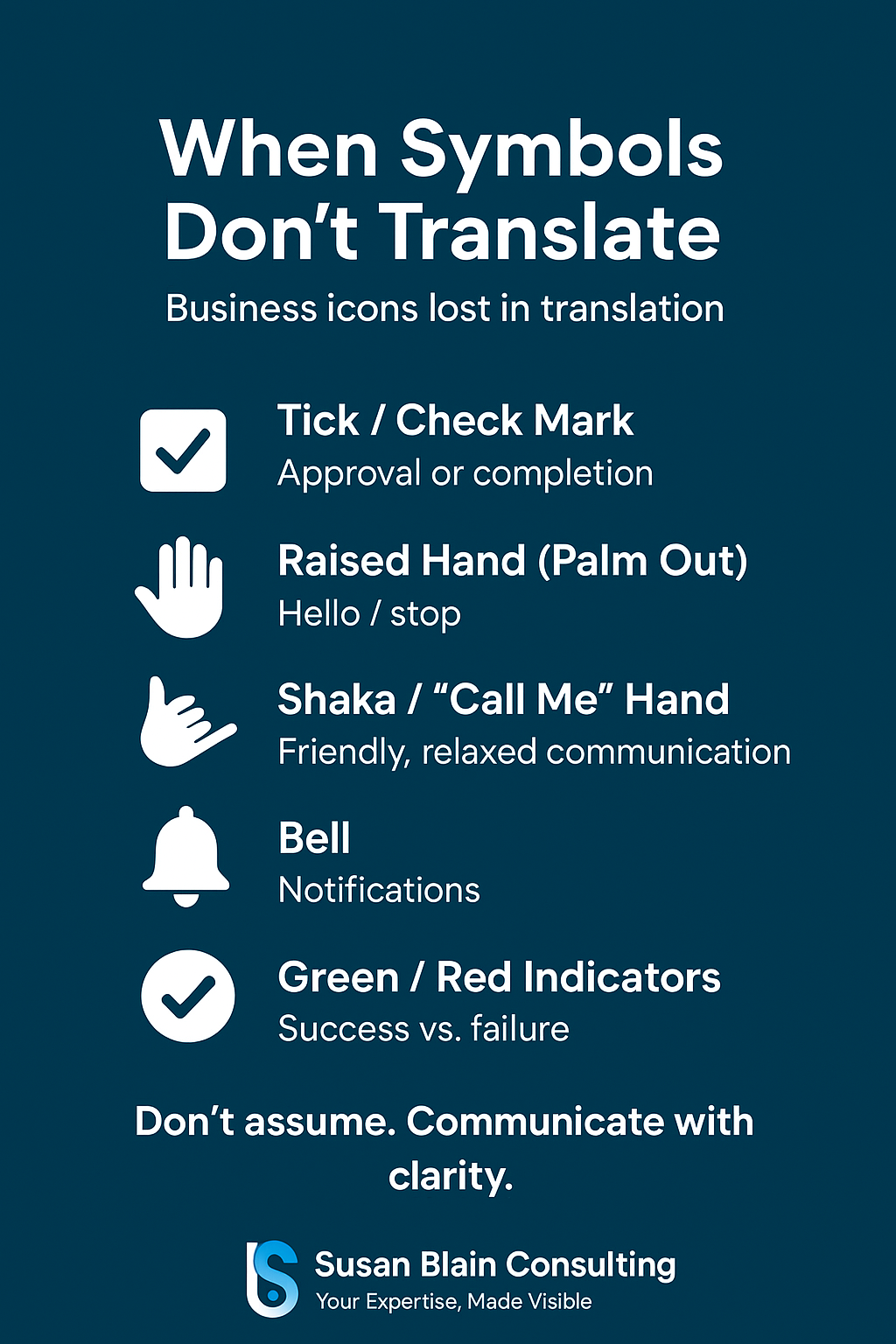
Marketing symbols mean different things around the world - don’t assume!
When I studied the altMBA, I had a rare opportunity to collaborate on marketing and communications challenges with colleagues from around the world.
What quickly became apparent was that many symbols I assumed were universal, from icons to gestures and colours, were not. Meaning shifted dramatically across cultures. What represented approval in one context could signal rejection in another. What looked like a friendly gesture could read as dismissive or even offensive elsewhere.
In the case of our altMBA project, symbols and colours related to food sustainability and food scarcity didn’t mean the same to me as an Australian as they did to our Indian audience.
For those working in the federal government or in national and international marketplaces, the nuance matters. It can mean the difference between a campaign that hits and one that misses.
Communication that works beautifully at home can misfire abroad if we forget that understanding isn’t automatic; it’s contextual.
The symbols in this article and infographic are examples of visuals we often assume everyone understands. Some may surprise you.
It’s a small but important reminder:
Clarity isn’t achieved by speaking louder; it’s achieved by designing for understanding.
Have you come across symbols or visuals that didn’t translate as expected in an international campaign?
Let’s Work Together | Book a conversation
More Ideas | Explore related articles
Subscribe to Making Impact Made Easy
